

Casino floors are not designed by accident. Every physical element — from the absence of clocks to the placement of chip trays — is engineered to produce specific behavioral outcomes in the people walking through them. Understanding these systems does not require gambling. It requires recognizing that the same logic operates inside workplaces, apps and retail environments every day.
How Time Distortion on the Casino Floor Mirrors Daily Life
Voom Casino and researchers studying casino psychology have documented the same pattern for decades: remove natural light, eliminate clocks and the human brain loses its primary anchoring mechanism for time passage. This is not a passive side effect. It is a deliberate architectural decision. Modern offices with no windows, social media feeds with no timestamps and streaming platforms with autoplay all apply identical logic to capture and extend attention without the user’s awareness.
The casino floor time-distortion method works because attention management is not instinctive under artificial conditions. When environmental cues are removed, most people underestimate elapsed time by 25 to 40 percent depending on the level of sensory stimulation present. Recognizing this pattern in your own environment is the first form of behavioral autonomy you can reclaim.
These are the most common real-world environments that use casino-style time distortion tactics:
- Social media platforms that suppress post timestamps on feeds
- Open-plan offices designed without windows or natural light access
- Subscription streaming services using autoplay with no pause prompts
- Retail stores using consistent artificial lighting at all hours
- Mobile games with no visible session timer or daily limit indicator
Placing a visible clock in your workspace, setting hard session timers on apps and scheduling natural light breaks every 90 minutes are direct countermeasures that translate the casino’s own logic back into personal discipline.
Chip Abstraction and the Weakening of Financial Judgment
Casino chips abstract real monetary value in a measurable way. A player exchanging $500 cash for chips completes a single transaction that converts concrete money into colored tokens with no direct emotional weight. The psychological pain of spending is measurably lower when value is represented by an abstraction rather than physical currency. This same mechanism operates in loyalty points, subscription credits, in-app currencies and buy-now-pay-later installment systems used in everyday commerce.
The table below compares how value abstraction appears across casino systems and common daily financial products:
| System | Abstraction Method | Behavioral Effect |
| Casino chips | Cash converted to tokens at entry | Reduces emotional resistance to each bet |
| In-app currency | Real money converted to game coins | Disconnects purchase from price awareness |
| Loyalty points | Purchases converted to non-monetary units | Encourages additional spending to reach thresholds |
| Buy-now-pay-later | Full cost split into smaller installments | Lowers perceived spending per transaction |
| Contactless payment | Physical currency replaced by a tap gesture | Removes tactile spending feedback entirely |
Restoring direct value awareness requires reconverting abstractions back to concrete numbers before spending. Calculating the dollar equivalent of points before redeeming them and reviewing full installment totals before committing to any purchase applies bankroll management logic directly to personal financial discipline.
Near-Miss Engineering and Reward Loops Outside the Casino
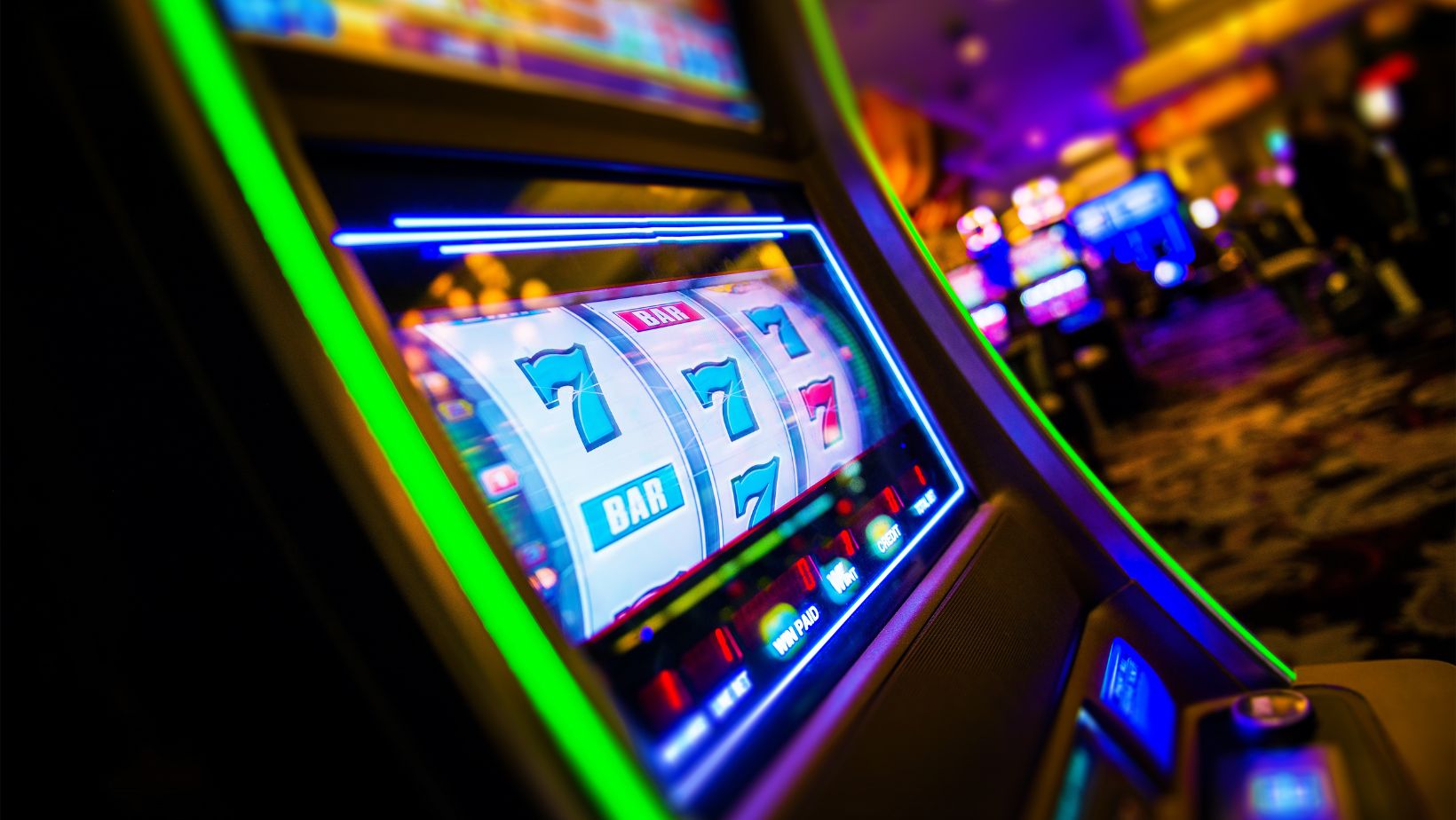
How Near-Miss Mechanics Are Built Into Slot Machines and Apps
Near-miss outcomes on slot machines are algorithmically engineered to sustain play motivation. The machine does not randomly produce near-miss results — it calculates and delivers them at specific frequencies to maximize the dopamine response associated with almost winning. Reward sounds trigger this same response in players regardless of the actual monetary size of the win. A $0.25 payout accompanied by lights and sound activates the same neurological pathway as a significantly larger win.
Social media platforms replicate this mechanism with measurable precision. The notification badge, the pull-to-refresh gesture and the variable reward interval between posts each correspond directly to slot machine behavioral conditioning techniques documented in casino psychology research. The engagement loop is structurally identical — only the currency exchanged is attention rather than money.
Practical Ways to Identify and Exit Reward Loops in Daily Behavior
Recognizing a reward loop requires identifying three specific components in any system you interact with regularly. Follow this sequence to audit any digital or physical environment for engineered engagement mechanics:
- Identify the trigger — the cue that initiates the behavior, such as a notification sound or a visual badge
- Locate the variable reward — the unpredictable outcome that sustains the loop, such as new content or a response
- Measure your session length — compare intended versus actual time spent inside the system over seven days
- Replace the variable reward with a fixed schedule — check at defined times rather than responding to triggers
- Track the behavioral change numerically — record session frequency and length weekly to confirm the loop is broken
Behavioral conditioning through near-miss engineering is not limited to gambling products. Any system designed to produce compulsive return behavior uses the same reward loop architecture that casino floors pioneered decades ago.
Loss Aversion and the Sunk Cost Fallacy in Careers and Decisions
Loss aversion drives irrational continuation of losing bets on casino floors because the psychological pain of a loss registers at approximately twice the intensity of an equivalent gain. A player down $200 does not evaluate their next bet rationally — they evaluate it against the emotional weight of the existing loss. The sunk cost fallacy operates in parallel: the money already spent becomes the justification for continuing to spend rather than a neutral past event.
These two cognitive biases appear with equal frequency in non-gambling decisions. The following situations represent common real-world expressions of casino-floor loss aversion logic:
- Remaining in an underperforming job because of years already invested in the role
- Continuing a failing project because of the budget already allocated to it
- Holding a declining financial asset to avoid realizing a paper loss
- Maintaining a relationship that no longer functions because of time previously committed
- Completing a degree program that no longer aligns with goals to avoid “wasting” prior study
Separating past costs from forward decisions is the core skill. Each decision should be evaluated exclusively on future expected value — not on the emotional weight of what has already been spent. This is the exact calculation a disciplined casino player applies before every bet.
Sensory Design as a Silent Persuasion System
Table game layouts are physically optimized to maximize dealer transaction speed and player bet frequency. The felt surface reduces friction and noise from chips. The arc-shaped table positions all players within equal reach of the dealer. The physical environment performs silent persuasion by removing every source of resistance to the next transaction. Sound, light and spatial layout each carry a defined behavioral function — none of it is decorative.
Retail stores use floor layout to guide foot traffic past high-margin products. Offices use open-plan design to sustain social pressure for visible productivity. Restaurants position high-margin dishes at specific table positions on the menu. These are all sensory manipulation strategies that function identically to casino floor design logic.
Developing awareness of these environmental cues is a transferable skill. When you enter any designed space — physical or digital — asking “what behavior is this environment built to produce” is the first step toward reclaiming the autonomous decision-making that the environment is specifically built to reduce.
Risk Tolerance and Bankroll Thinking Applied to Real Decisions
Risk tolerance calibration learned from structured casino game logic has a direct application in personal finance and investment. Bankroll management in a casino context means defining the total amount allocated to risk before any session begins, setting a hard exit threshold and never committing more than a fixed percentage of the total bankroll to a single bet. These three rules translate directly into portfolio management, business investment allocation and emergency fund discipline.
Applying a bankroll management framework to a personal financial system involves the following structure:
- Define your total risk capital — the amount you can lose without affecting essential obligations
- Set a single-position limit — allocate no more than 5 to 10 percent of risk capital to any single decision
- Establish a hard exit threshold — define the total loss level at which you stop and reassess without exception
- Record every decision and outcome — build a personal performance log over a minimum of 30 decisions
- Review the log to identify systematic errors — separate skill-driven results from variance-driven ones
A player using basic blackjack strategy with disciplined bankroll management reduces the house edge to approximately 0.5 percent. The same principle applied to personal financial decisions reduces the cost of cognitive bias by replacing impulsive judgment with a pre-defined, rule-based system.
What the Casino Floor Actually Teaches
Casino floor logic is a complete behavioral engineering system. Time distortion, value abstraction, near-miss conditioning, sensory design and loss aversion exploitation each operate through mechanisms that function identically in workplaces, digital platforms and financial products. Recognizing each mechanism by name — and knowing the specific countermeasure for each — converts passive exposure into active, informed decision-making in every environment you enter.