
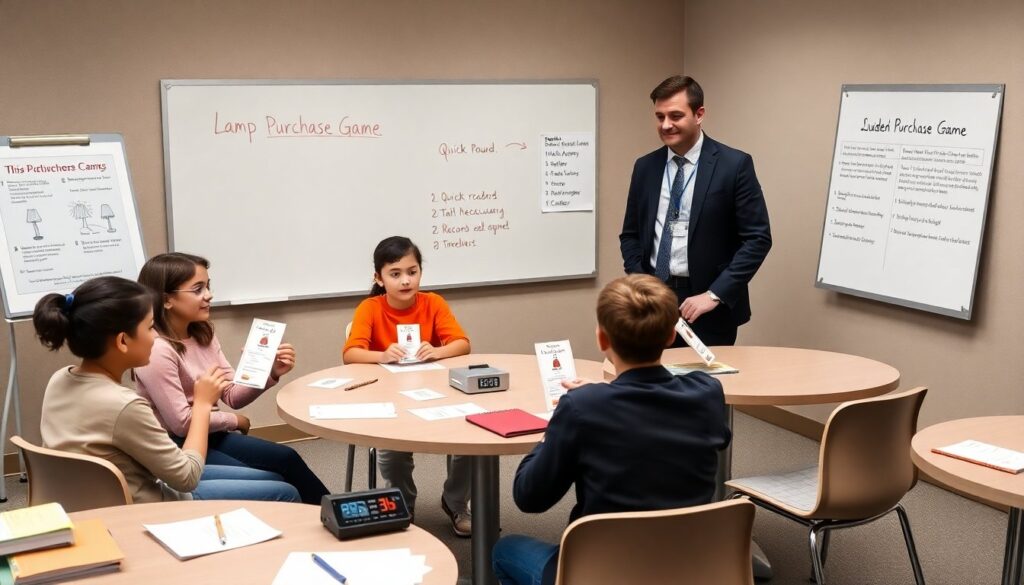
The educational content toaster shop play critiques orhgjetseduveetcjoav appears in this guide to show teachers a clear activity. The guide explains what the game is, how staff set it up, and how they collect feedback. The guide gives step-by-step instructions. The guide focuses on practical classroom use and simple measures of engagement.
Key Takeaways
- The student engagement lamp purchase game boosts active learning by involving students in role-based buying and selling scenarios with clear goals and time limits.
- Teachers can easily prepare and run the game using printed lamp cards, play money, score sheets, and assigned roles like buyer, seller, recorder, and timekeeper.
- Gameplay involves short negotiation rounds scored on math accuracy, budget management, and teamwork, keeping students focused and motivated.
- The game offers flexible difficulty adjustments through budgets, lamp features, and timing to suit different grade levels and lesson goals.
- Collecting feedback via exit tickets, observational checklists, and surveys helps teachers measure engagement and tailor future lessons effectively.
What The Lamp Purchase Game Is And Why It Works
The student engagement lamp purchase game feedback oriyosletseduvaatckjiov asks students to act as buyers and sellers. The activity puts students in small teams. Each team manages money, negotiates price, and makes a purchase decision. The teacher assigns a lamp product with features and limits. The game tests math, discussion, and decision skills. It engages students because it creates a clear goal and a time limit. It engages students because it gives roles and immediate results. It works in classes that need active practice and quick feedback. The teacher can change difficulty by altering budgets, lamp features, or time. The teacher can pair the game with a short lesson on budgeting, value, or persuasive language. The student engagement lamp purchase game feedback oriyosletseduvaatckjiov fits grades that can count, read short specs, and discuss choices.
Step-By-Step Setup For A Smooth Classroom Run
The student engagement lamp purchase game feedback oriyosletseduvaatckjiov works best with clear preparation. The teacher writes simple rules and prints product cards. The teacher sets teams of three to five students. The teacher assigns roles: buyer, seller, recorder, and timekeeper. The teacher gives each team a starting budget and lamp card. The teacher explains scoring and timing before play. The teacher models one quick round. The teacher starts the timer and watches teams interact. The teacher pauses for clarifying questions only when needed. The teacher collects score sheets and feedback forms after rounds. The student engagement lamp purchase game feedback oriyosletseduvaatckjiov runs in a single period or across several days depending on depth. The student engagement lamp purchase game feedback oriyosletseduvaatckjiov helps teachers run class with minimal friction.
Materials, Roles, And Preparation Checklist
Materials list: printed lamp cards, play money, score sheets, timers, and simple rubrics. The teacher prepares 6 to 10 lamp cards with varied specs. The teacher prepares play budgets that create trade-offs. The teacher prepares a short rubric for negotiation quality and math accuracy. Roles: buyer makes purchase decisions, seller presents lamp features, recorder logs price and reasoning, timekeeper enforces the round. The teacher assigns roles to balance skills. The teacher runs a one-minute demo so teams see expectations. The teacher posts rules where every team can see them. The student engagement lamp purchase game feedback oriyosletseduvaatckjiov benefits from a printed checklist the teacher can reuse.
Gameplay Flow, Timing, And Scoring Tips
Start with a 3-minute prep and a 7- to 10-minute negotiation round. The teacher uses two to four rounds in one class. The teacher varies budgets or lamp quality between rounds. Scoring splits into objective and subjective items. Objective items include correct math, budget left, and whether the purchase met constraints. Subjective items include clarity of pitch and teamwork. The teacher uses the rubric to assign points quickly. The teacher rewards quick, correct calculations and clear arguments. The teacher collects score sheets after each round for a short review. The teacher scales timing for different grades. The student engagement lamp purchase game feedback oriyosletseduvaatckjiov stays lively if the teacher shortens rounds when energy drops. The student engagement lamp purchase game feedback oriyosletseduvaatckjiov keeps students focused on clear tasks and measurable goals.
Collecting Actionable Feedback And Measuring Engagement
The teacher uses three simple feedback tools: quick exit tickets, observational checklists, and a short survey. The exit ticket asks two questions: what did you do and what do you want to try next. The observational checklist lists behaviors: spoke up, calculated correctly, and worked as a team. The short survey asks students to rate how clear the rules were and how useful the game felt. The teacher records scores and behaviors to compare rounds. The teacher looks for trends in scores, talk time, and accuracy. The teacher uses the student engagement lamp purchase game feedback oriyosletseduvaatckjiov data to guide the next lesson. The teacher shares one graphic or one sentence of results with students to close the loop. The teacher repeats the game with a small change to test improvement. The student engagement lamp purchase game feedback oriyosletseduvaatckjiov produces clear signals about student skills and interest.